Flaw in macOS Exposed Apple Intelligence and iCloud Data
A newly disclosed macOS vulnerability dubbed “Sploitlight” allowed attackers to bypass Apple’s Transparency, Consent, and Control (TCC) protections using Spotlight plugins to access private data including geolocation, facial recognition, and other Apple Intelligence caches, without user permission.
Apple patched the flaw (CVE-2025-31199) in macOS Sequoia 15.4, released on March 31, 2025.
The issue was uncovered by researchers Jonathan Bar Or, Alexia Wilson, and Christine Fossaceca from Microsoft Threat Intelligence during a proactive hunt for processes with elevated entitlements on macOS. Their investigation led them to exploit the Spotlight indexing framework, specifically .mdimporter plugins, to leak sensitive data from protected directories like Downloads and Pictures, areas that should require explicit user consent under TCC protections.
Spotlight, a core macOS search feature, relies on a producer-consumer architecture where the mds daemon triggers mdworker tasks to index file metadata using importer plugins. These plugins, while sandboxed, are granted temporary privileged access to scan files and update search indices. Microsoft researchers discovered that attackers could abuse these plugins by creating or modifying unsigned .mdimporter bundles and planting them in the user’s Spotlight directory.
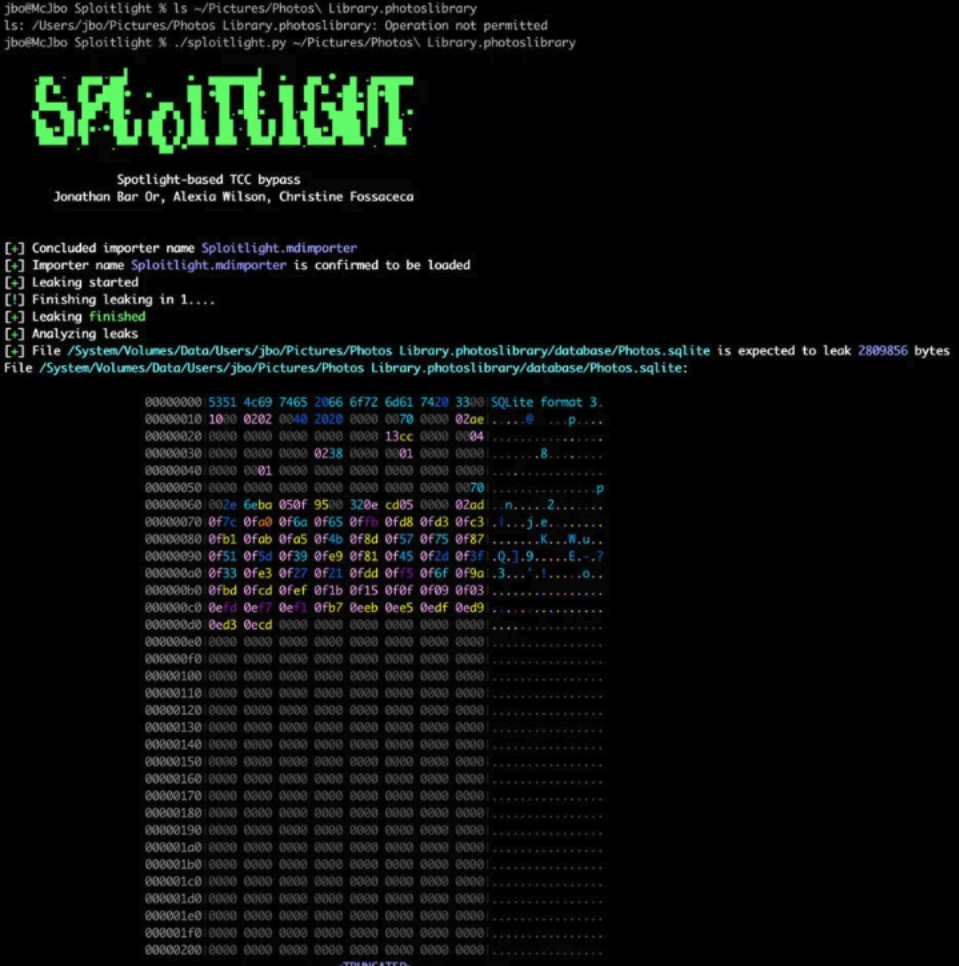
Once deployed, the malicious plugins could be used to scan arbitrary file types and log their contents to the system’s unified logs, completely circumventing TCC restrictions. The proof-of-concept exploit crafted by Microsoft (also named Sploitlight) demonstrated the ability to extract data from Photos.sqlite and photos.db, which store a wide range of Apple Intelligence metadata.